Castaway: Where the Florida Keys Still Feel Like the Florida Keys
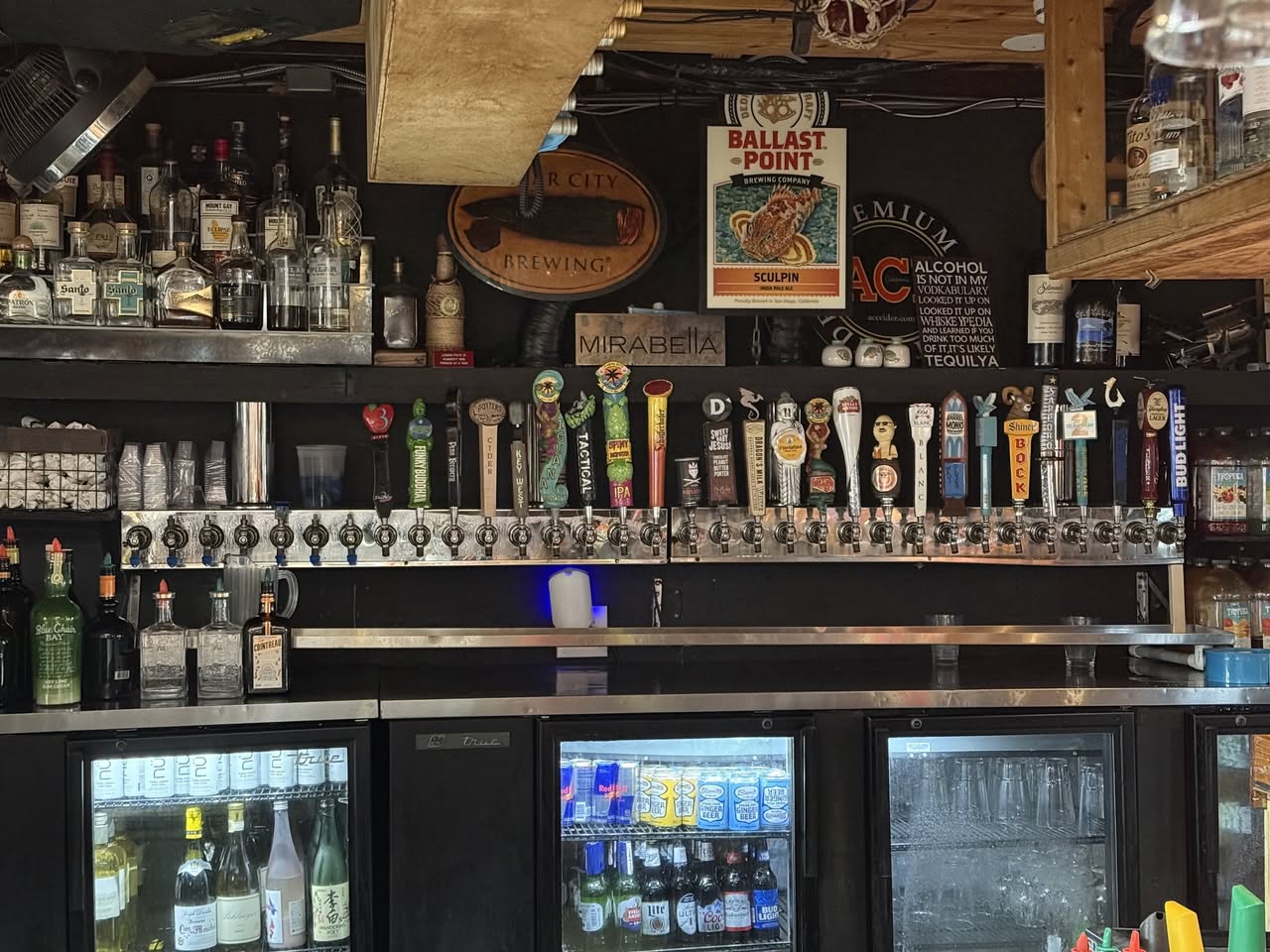
While staying in Marathon, Amy and I found ourselves craving something our beautiful resort couldn't offer. Luxury has its place, but so do weathered wooden walls, locals perched at the bar, and restaurants where personality has accumulated over decades instead of being installed during a renovation.
That search led us to Castaway.
Tucked away on 15th Street just south of Marathon's airport and about a half mile north of the Seven Mile Bridge on the Atlantic side, Castaway sits among working boatyards, marinas, and repair shops. It's exactly where you'd expect to find a restaurant that has been serving the Keys for generations—not polished waterfront real estate, but the working waterfront itself.
Built in 1951 as a modest seafood house catering to Marathon's shrimping fleet, shrimp boats once tied up only steps from the restaurant before crews wandered inside for cold beer and steamed shrimp. When current owner John Mirabella purchased Castaway in 1999, he wisely resisted the temptation to reinvent it. Instead, he expanded the menu to include steaks, sushi, and an impressive beer selection while preserving everything that made the restaurant special. Today, after roughly seventy-five years in business, Castaway proudly stands as Marathon's oldest continuously operating restaurant.
And that's obvious the moment you walk through the door.
Castaway isn't decorated—it has evolved.
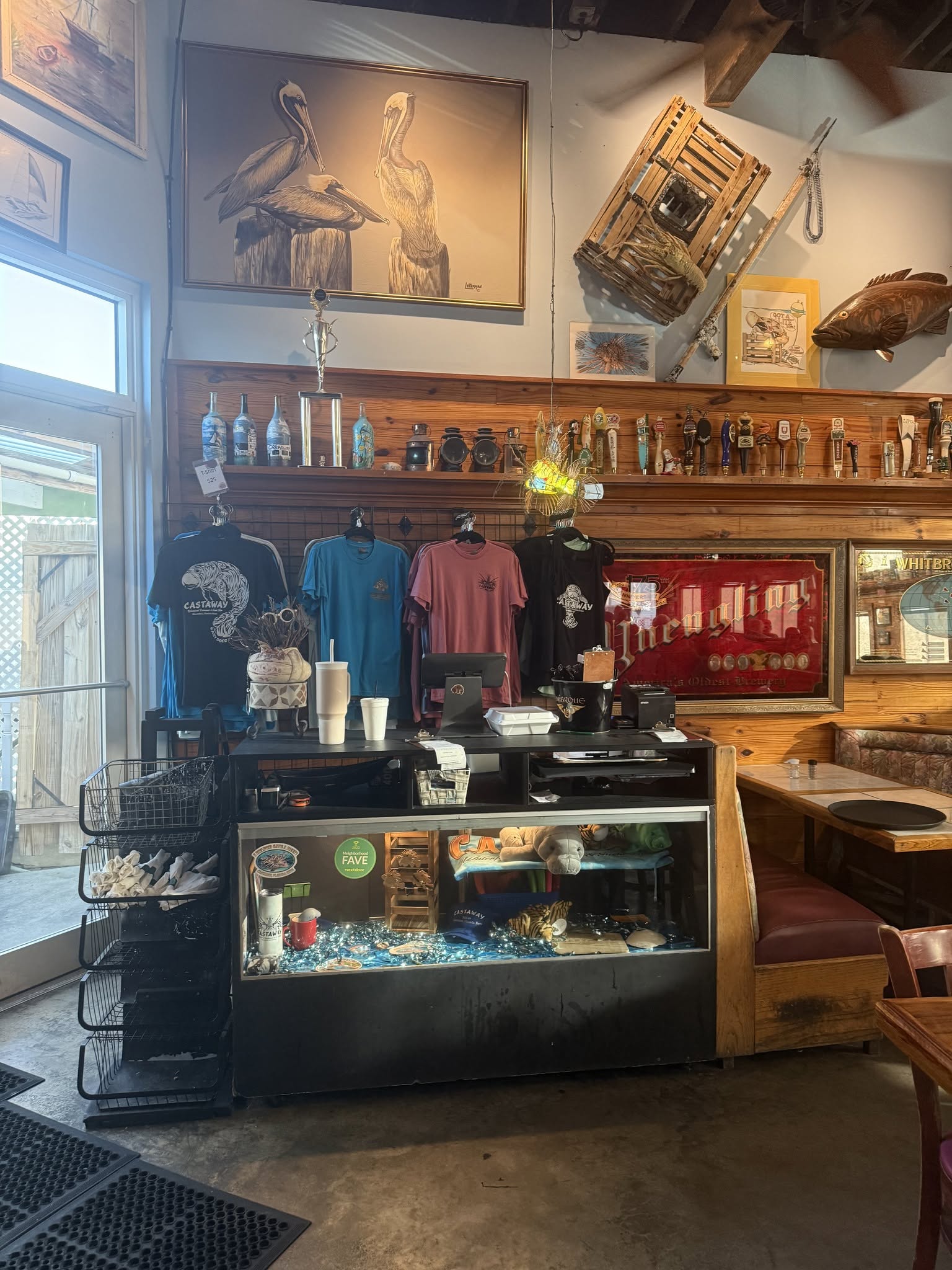
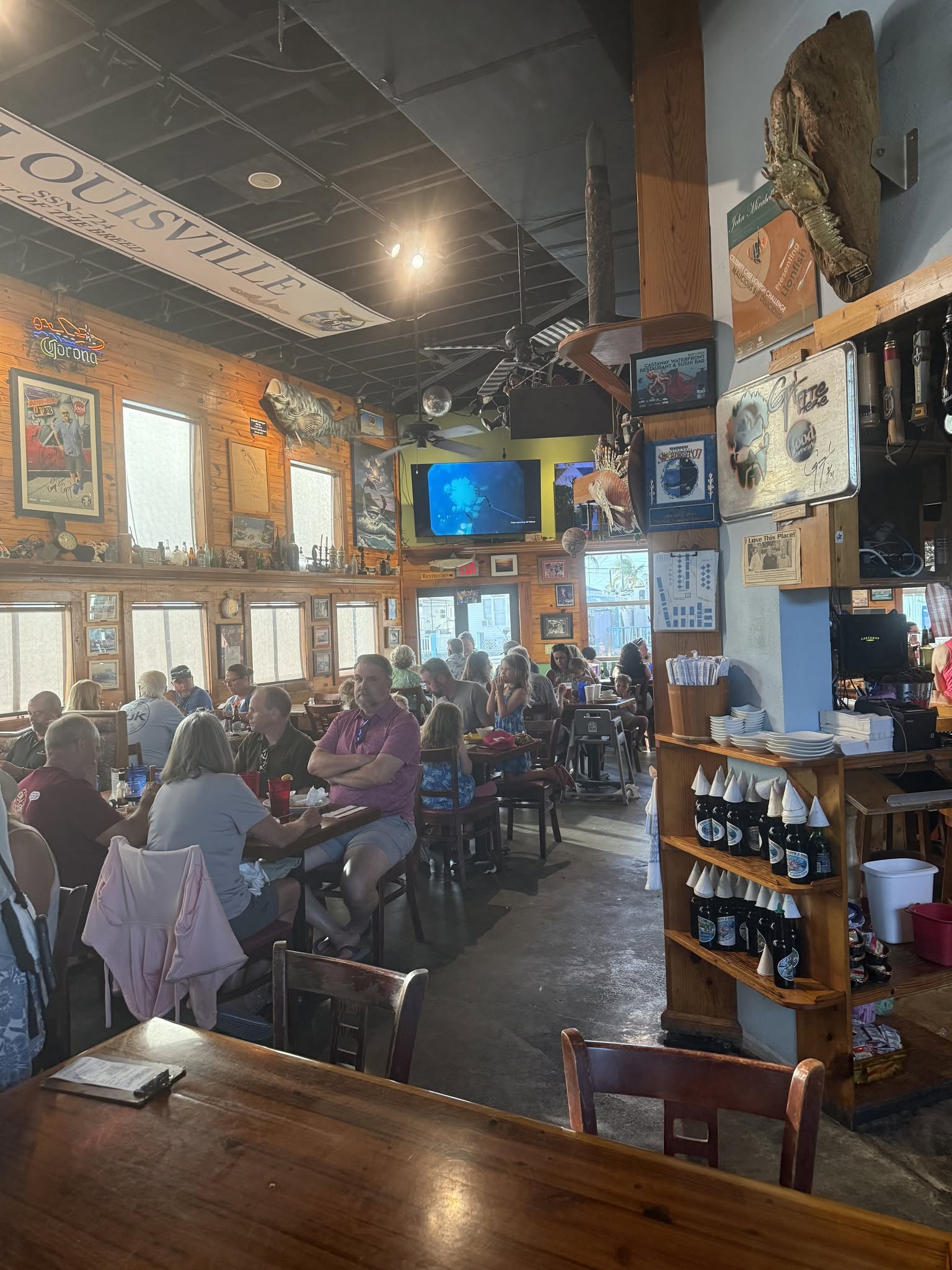
Every mounted fish, faded photograph, weathered sign, lobster trap, buoy, and piece of nautical memorabilia seems to have earned its place over decades rather than being ordered from a decorating catalog. Nothing feels staged. Nothing feels curated. It simply feels lived in. The walls tell stories, the bar hums with conversation, and the entire restaurant feels like a scrapbook of the Florida Keys assembled one fishing trip, one dive expedition, and one regular customer at a time.
While the restaurant offers outdoor seating, the night we were there Florida had other plans. Once you're off the main channel and the breeze disappears, the tropical heat wraps around you like a warm, damp blanket. By the time we arrived that evening, the air-conditioned bar looked far more inviting than the patio.
Fortunately, luck was on our side. Two bar stools had just opened.
Besides escaping the humidity, sitting at the bar always has its advantages. You're part of the conversation, you meet interesting people, and perhaps most importantly, you're never very far from your next drink.
Amy ordered the Sailor Sedative, Castaway's playful interpretation of the famous Painkiller cocktail. Because the original trademark name requires Pusser's Rum, Castaway prepares theirs with Sailor Jerry Rum instead and renamed the classic. Creamy, tropical, and finished with freshly grated nutmeg, it delivered everything you'd hope for in a Keys cocktail.
I stayed with an old favorite—a Bulleit Rye Manhattan served on the rocks. Sometimes the classics are classics for a reason.
One of the reasons we came to Castaway was to try something we'd never eaten before: lionfish.
Native to the Indo-Pacific, lionfish have become one of the Florida Keys' most destructive invasive species after being introduced through the aquarium trade decades ago. They reproduce at an astonishing rate—a single female can produce well over a million eggs each year—and with few natural predators here, they've become voracious hunters of juvenile reef fish. Every lionfish removed from the reef helps restore balance to the ecosystem, making this one of the few entrées where dinner is actually part of the solution.
Of course, harvesting them requires care. Lionfish carry eighteen venomous spines capable of delivering an intensely painful sting, although serious reactions are uncommon. Once those spines are safely removed, however, the fish itself is perfectly safe to eat. The venom is confined entirely to the spines, not the meat, and the result is a mild, flaky fish that's become something of a culinary conservation success story throughout the Keys.
Amy chose the lobster enchiladas, the very dish that brought Castaway national attention when it was featured on Diners, Drive-Ins and Dives. The generous pieces of lobster were undeniably meaty, although a few had crossed slightly into overcooked territory. The enchiladas themselves were hearty and filling, served atop a house-made tomatillo sauce that added a welcome brightness and acidity to balance the richness. Accompanied by rice and beans, it was a satisfying meal, if perhaps a bit heavier than expected.
I couldn't resist ordering the lionfish, prepared baked in a white wine, lemon butter sauce with tomatoes and capers. The fish itself was excellent—light, delicate, flaky, and pleasantly mild. Whether it was the preparation or perhaps a little assistance from the Manhattan, it was a very enjoyable first introduction to lionfish. My only criticism was the enthusiasm shown with the capers. There were enough scattered across the plate that, at first glance, they almost resembled a serving of peas. After brushing many of them aside, the balance of flavors improved considerably.
My meal included two sides. I had a Caesar salad which featured crisp romaine, a pleasantly light dressing, and surprisingly crunchy packaged croutons that worked just fine. The loaded baked potato was the lone disappointment—small, overcooked, and a bit firm—but hardly enough to detract from the evening.
One of the pleasures of sitting at the bar is that conversations happen naturally. Before long, we found ourselves chatting with the couple seated beside us, longtime Marathon residents who clearly considered Castaway one of their regular haunts. That's usually one of the best indicators of a restaurant's success. Tourists may discover a place, but locals sustain it.
To finish the evening, Amy and I shared a Key Lime Martini. Served with a graham cracker rim and garnished with a slice of lime along with a slice of Key lime pie, it was exactly the kind of playful dessert that felt perfectly at home in the Florida Keys.
So, would I drive a few hours just for the food?
Probably not.
Would I happily return every time I'm in Marathon?
Absolutely.
Not every memorable restaurant has to earn a Michelin star or a Bib Gourmand designation. Sometimes the destination isn't about culinary perfection. Sometimes it's about stepping away from polished resorts and curated experiences and spending a few hours somewhere authentic. Somewhere with history in its walls, stories behind the bar, and enough character that no designer could ever successfully recreate it.
Castaway isn't perfect.
It's better than that.
It's real.